

Though widely regarded as poor in early Anglo-Saxon (5-7th century) burial archaeology, the West Midlands is home to some spectacularly furnished burials, most of which, excavated prior to modern archaeology and with finds not on public display, remain obscure even to specialists. During this series we have explored a particular zone -- the Warwickshire Avon Valley — which is unusually rich in cemetery archaeology, representing an 'Anglo-British' community at a crossroads between different cultural zones, and living at a time when, in surrounding kingdoms, early medieval kingdoms were beginning to form.
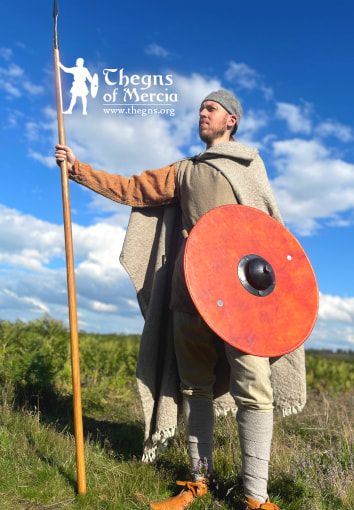
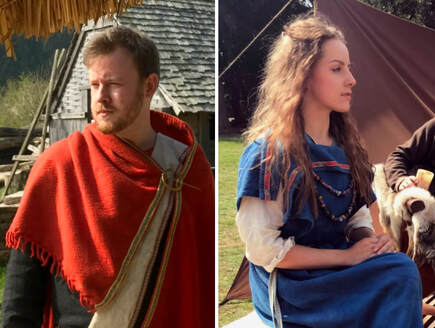
Previous chapters have explored the archaeology of the particularly fascinating and well-studied cemetery at Wasperton, which was in continuous use by the local community from the late Roman period until the 7th century, and presented two costumed reconstructions based on particular graves; of a high status mid 6th century woman buried with elaborate brooches and textiles (grave 24; "The Woman from Wasperton") and an early 6th century man buried with a limited set of grave-goods including some typical pieces of warrior-gear (grave 91; "Wasperton 'Warrior'"). Compensating for limited survival by drawing on inferences from wider early Anglo-Saxon archaeology, better preserved items of clothing from adjacent periods and cultures, and iconography, these reconstructions provide the opportunity to come 'face-to-face' with individuals who lived in this region over 1400 years ago, and also provide the opportunity to see better preserved finds from these graves presented functioning and in context. These reconstructions have heavily relied upon insights from the thorough modern archaeological analysis of the cemetery of Wasperton, but other cemeteries along the Avon excavated in earlier times -- some yielding far more spectacular finds -- are much less well understood, having been haphazardly excavated and poorly recorded.
We began this series by revisiting the fascinating site of Bidford-on-Avon; the historically most important crossing of the navigable river Avon, traversed by a Roman road linking the Fosse Way to the south, Watling Street and what would become the Mercian core of the Trent Valley to the north, this 'productive site' (Richards & Naylor, 2010) was perhaps a nexus for trade in the region in late antiquity and supported a prosperous and well-connected community, represented by a large cemetery of cremations and furnished burials on the north bank. This is the largest such cemetery in the region (Tompkins, 2019) but has suffered from piecemeal excavation and patchy reporting, beginning in the early 1920s, resulting in a severely incomplete understanding of the site, its national significance, and under-appreciation of the finds, many of which have never been placed on public display and remain obscure even to specialists.
In 2014 we attempted to raise the profile of this cemetery by re-creating the then-obscure but quite remarkable decorated early 6th century shield from Bidford grave 182, the remains of which are now displayed at the Ad Gefrin centre in Wooler, Northumberland, and have worked with custodians of the 1920s finds from Bidford -- the Shakespeare Birthplace Trust — to make sense of some of the other finds. In the first instalment of this series (here) we discussed the Bidford-on-Avon cemetery and (due to improper record-keeping during the 1920s excavations) the tricky detective-work required to reconstruct the contents of one particular burial; grave 88.
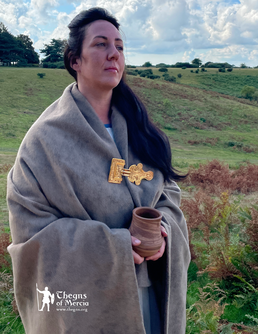
As the finale of this series, here we present a costume reconstruction of the lady from Bidford-on-Avon grave 88 based on this research, incorporating replicas of her accoutrements presented in context, and drawing on insights from related burials at Wasperton. The results of this project by team member Julia Ward, with contributions by Æd Thompson, early medieval jewellery specialist Andrew Mason, were (together with the previous two reconstructions) unveiled as part of a special event at Sutton Hoo in summer 2023.
Previous chapters have explored the archaeology of the particularly fascinating and well-studied cemetery at Wasperton, which was in continuous use by the local community from the late Roman period until the 7th century, and presented two costumed reconstructions based on particular graves; of a high status mid 6th century woman buried with elaborate brooches and textiles (grave 24; "The Woman from Wasperton") and an early 6th century man buried with a limited set of grave-goods including some typical pieces of warrior-gear (grave 91; "Wasperton 'Warrior'"). Compensating for limited survival by drawing on inferences from wider early Anglo-Saxon archaeology, better preserved items of clothing from adjacent periods and cultures, and iconography, these reconstructions provide the opportunity to come 'face-to-face' with individuals who lived in this region over 1400 years ago, and also provide the opportunity to see better preserved finds from these graves presented functioning and in context. These reconstructions have heavily relied upon insights from the thorough modern archaeological analysis of the cemetery of Wasperton, but other cemeteries along the Avon excavated in earlier times -- some yielding far more spectacular finds -- are much less well understood, having been haphazardly excavated and poorly recorded.
We began this series by revisiting the fascinating site of Bidford-on-Avon; the historically most important crossing of the navigable river Avon, traversed by a Roman road linking the Fosse Way to the south, Watling Street and what would become the Mercian core of the Trent Valley to the north, this 'productive site' (Richards & Naylor, 2010) was perhaps a nexus for trade in the region in late antiquity and supported a prosperous and well-connected community, represented by a large cemetery of cremations and furnished burials on the north bank. This is the largest such cemetery in the region (Tompkins, 2019) but has suffered from piecemeal excavation and patchy reporting, beginning in the early 1920s, resulting in a severely incomplete understanding of the site, its national significance, and under-appreciation of the finds, many of which have never been placed on public display and remain obscure even to specialists.
In 2014 we attempted to raise the profile of this cemetery by re-creating the then-obscure but quite remarkable decorated early 6th century shield from Bidford grave 182, the remains of which are now displayed at the Ad Gefrin centre in Wooler, Northumberland, and have worked with custodians of the 1920s finds from Bidford -- the Shakespeare Birthplace Trust — to make sense of some of the other finds. In the first instalment of this series (here) we discussed the Bidford-on-Avon cemetery and (due to improper record-keeping during the 1920s excavations) the tricky detective-work required to reconstruct the contents of one particular burial; grave 88.
As the finale of this series, here we present a costume reconstruction of the lady from Bidford-on-Avon grave 88 based on this research, incorporating replicas of her accoutrements presented in context, and drawing on insights from related burials at Wasperton. The results of this project by team member Julia Ward, with contributions by Æd Thompson, early medieval jewellery specialist Andrew Mason, were (together with the previous two reconstructions) unveiled as part of a special event at Sutton Hoo in summer 2023.
 RSS Feed
